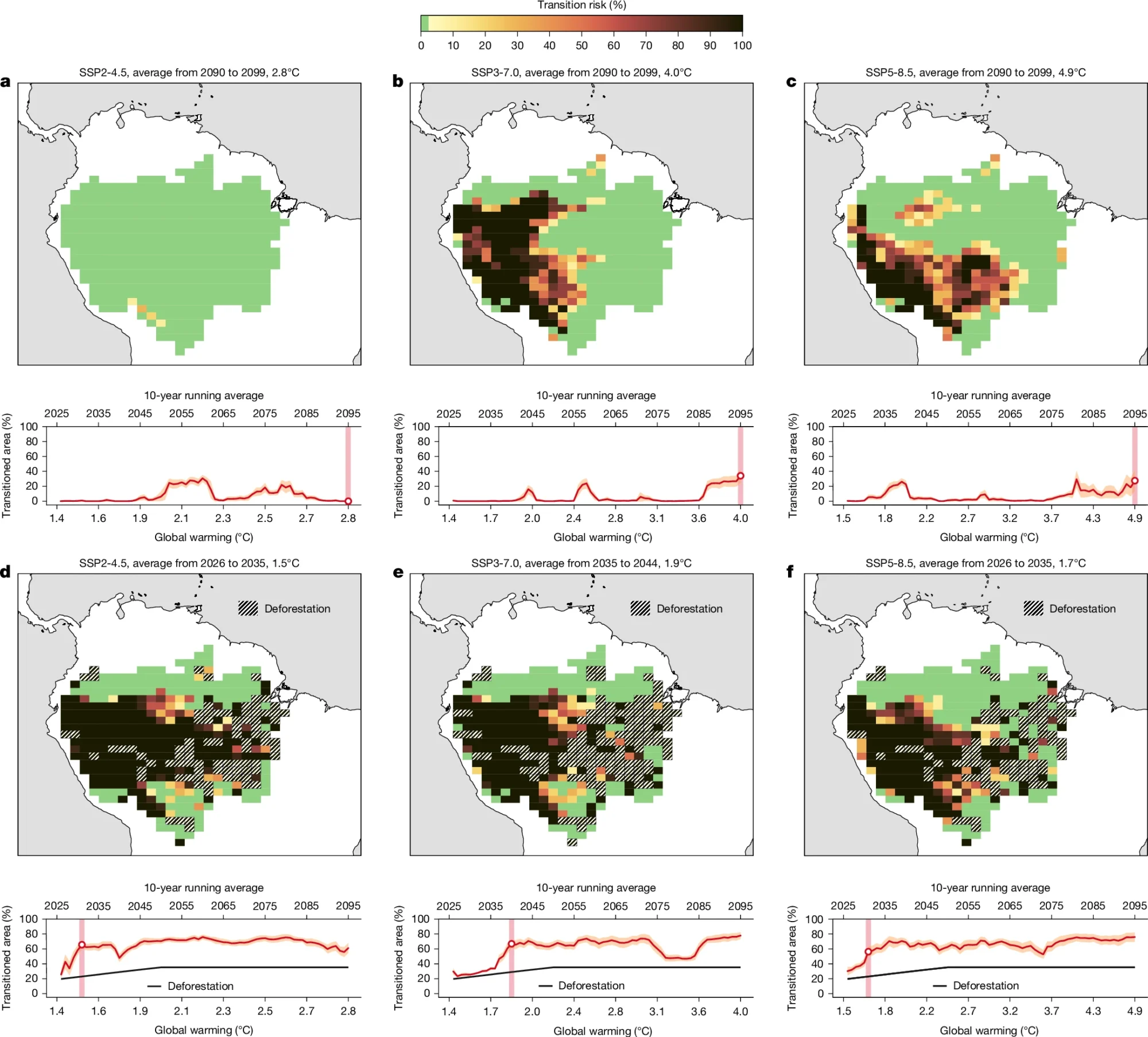
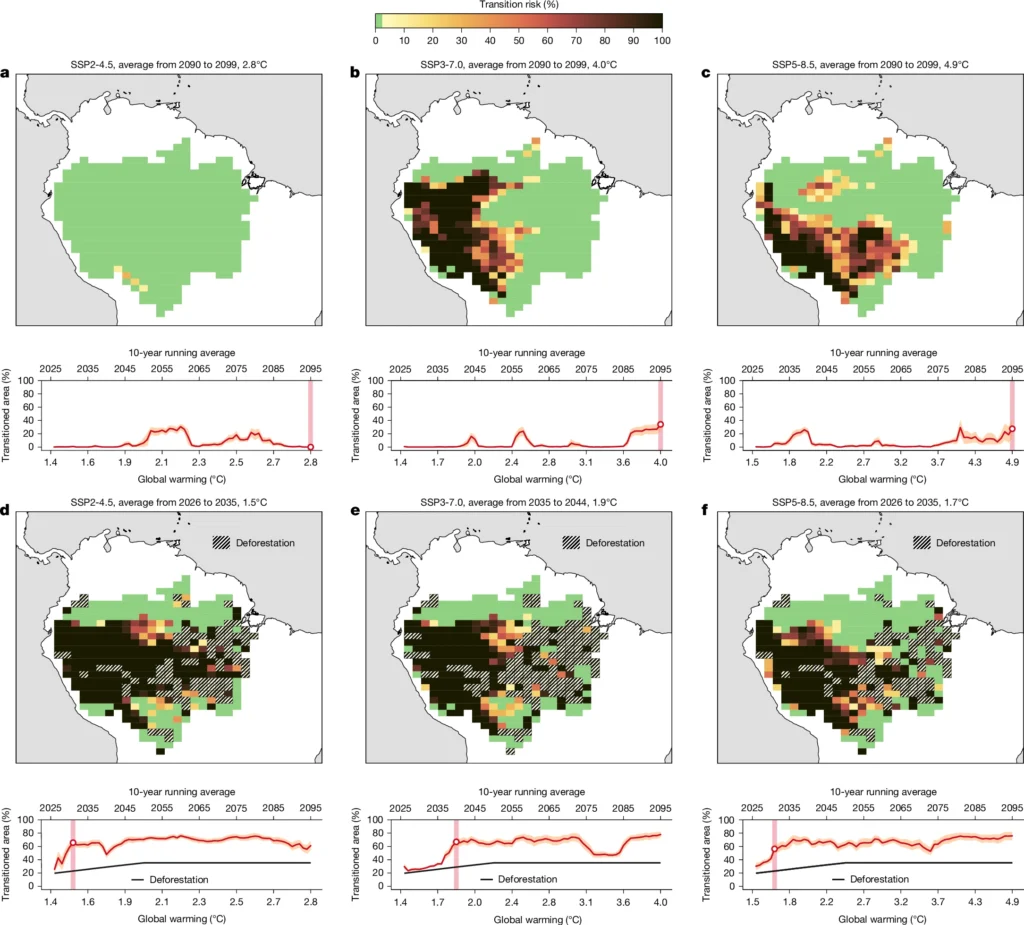
The Amazon rainforest is approaching a critical threshold faster than previously predicted by climate models. A groundbreaking study published in the prestigious journal Nature reveals a stark reality: while global warming alone poses a massive risk to the basin, the combination of global climate change and local deforestation is drastically lowering the forest's natural defense mechanisms.
For eco-reserves and wildlife sanctuaries located on the frontlines of the changing climate—such as the Chuchini Amazon Wildlife Eco Reserve and Lodge in the Beni Department of Bolivia—this scientific data isn't just theory. It is an urgent call to action.Here is what the latest science means for the Bolivian Amazon, and how Chuchini is actively implementing real-world solutions to protect our planetary lungs and native wildlife.
The Core Science: Why the Amazon Threshold is Dropping
According to the Nature study, the Amazon relies heavily on an internal, self-stabilizing system known as atmospheric moisture recycling. Trees absorb water from deep soil layers and release it back into the air through transpiration, generating up to 50% of the basin's own rainfall.However, the compounding triggers of human-driven land use and rising global temperatures are breaking down this vital cycle. The study highlights two terrifying shifts:
- The Lowered Safe Boundary: Without deforestation, the Amazon could withstand up to 3.7°C to 4.0°C of global warming before facing large-scale instability. But when deforestation rates reach 22% to 28%, the tipping point drops to a global warming level of just 1.5°C to 1.9°C—a threshold the world is navigating right now.
- The "Downwind" Domino Effect: A staggering 87.5% to 99% of simulated forest transitions are caused by cascading network effects. When forests are cleared upwind in the east, the moisture network collapses, sending self-propelling drought cascades traveling hundreds of kilometers downwind to the western and southwestern Amazon.
Why Bolivia’s Beni Department is at Critical Risk
Because Chuchini is nestled in the southwestern fringe of the Amazon basin near Trinidad, it sits directly downwind of these regional moisture cascades. As upwind trees disappear, the dry season lengthens, dynamic floodplains face extreme water volatility, and the surrounding landscape becomes highly vulnerable to human-ignited agricultural wildfires.
Left unchecked, this process leads to savannization—the permanent transition of a lush, hyper-biodiverse tropical canopy into an open, degraded grassland.
Join the Mission to Protect Chuchini
The science is clear: protecting the Amazon requires global cooperation, localized reforestation, and zero-deforestation models. Every tree we plant through the Palmera Habitat project and every acre of canopy we shield from wildfire helps anchor the southwestern Amazon water cycle.
Want to be part of the solution? Book your sustainable stay at Chuchini Amazon Wildlife Eco Reserve, support our reforestation initiatives, and experience firsthand how eco-tourism can defend a global tipping point.


 English
 Español
 Deutsch
 Français
 Nederlands
 Dansk
Dansk Italiano
 日本語
日本語 한국어
한국어 简体中文
简体中文 Português do Brasil